

سەرۆکی زانکۆی جیهان-سلێمانی قەڵغانی ڕێزلێنان پێشکەش بە پ.ی.د. هەستیار حمەرەشید دەکات
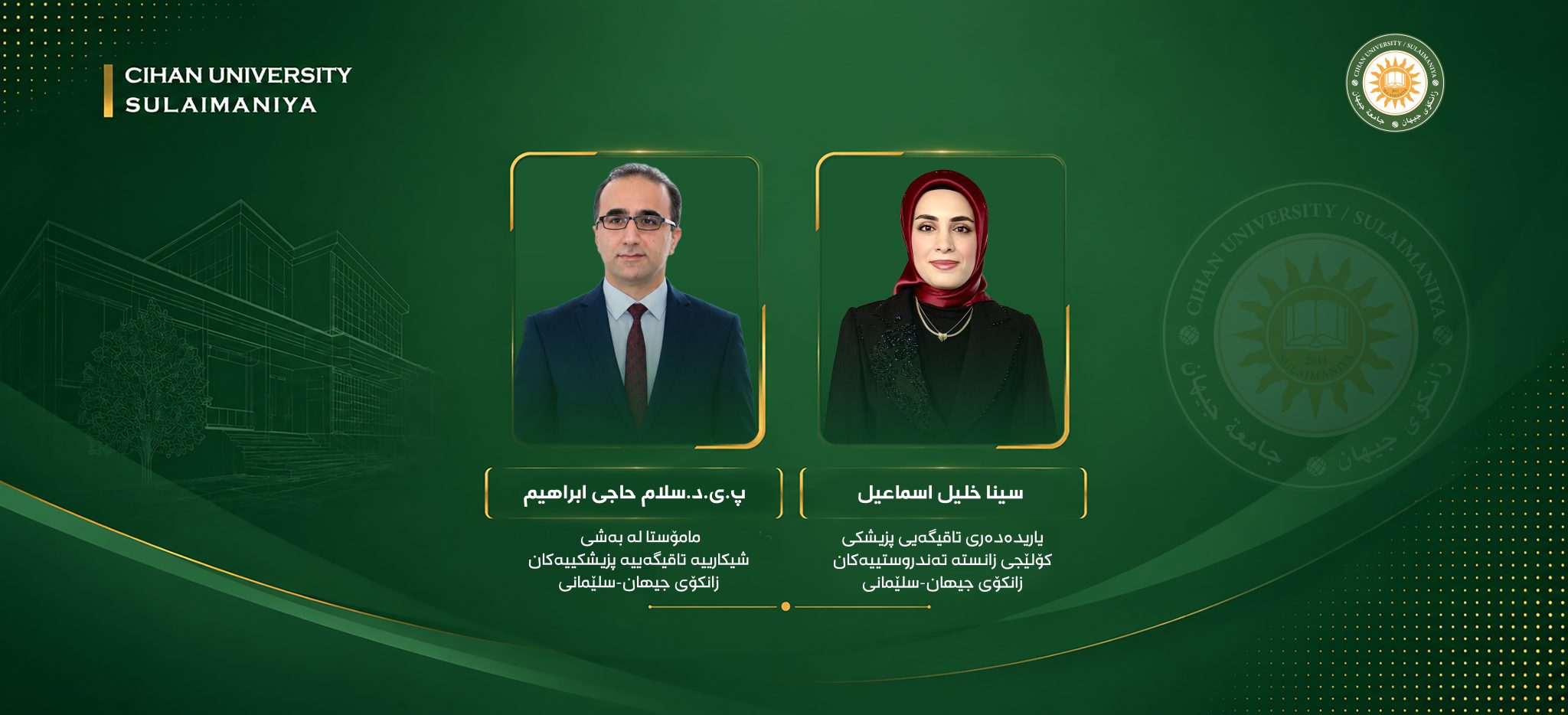
Asst. Prof. Dr. Salam Haji Ibrahim, a lecturer at the department of Medical Laboratory Analysis and Sina Khalil Ismael, a laboratory assistant at the College of Health Sciences in Cihan University–Sulaymaniya have published a new research article to investigates the therapeutic potential of Citrullus colocynthis extract in reducing diabetes-induced hypothalamic-pituitary-gonadal (HPG) axis dysfunction.
The researcher focused on the potential antidiabetic effects of the extract, through using albino male rats and evaluating the effects of the extract on blood glucose levels, reproductive hormones, sperm quality, testicular and pancreatic histopathology, and Immunohistochemistry for pancreatic glucose transporter 2 (GLUT2) expression.
The findings demonstrated that treatment with Citrullus colocynthis extract significantly decreased blood glucose and glycated hemoglobin levels with marked elevation in serum insulin levels. As well as, significant reduction of gonadotropin-releasing hormone in diabetic rats was substantially recovered, with no changes in luteinizing hormone, follicular stimulating hormone, and testosterone levels, conversely, sperm motility was significantly increased. Furthermore, Histopathological results have shown marked improvement in pancreatic and testicular tissue, in addition, Immunohistochemical analysis showed complete restoration and normal localization of GLUT2 in pancreatic beta cells after treatment with the extract.
These findings suggest that the medicinal plant (Citrullus colocynthis extract) may serve as a promising natural candidate for ameliorating diabetic complications through a potent natural effect against HPG-axis dysfunction, pancreatic and testicular alteration, and GLUT2 overexpression in pancreatic beta cells. The authors recommend further investigations to isolate the bioactive constituents responsible for these effects and to explore their mechanisms of action in greater detail.
This article has been published in the Open Veterinary Journal.
The journal is indexed in both Scopus and Web of Science (Emerging Sources Citation Index, ESCI).
The article can be found at the following link:
https://doi.org/10.5455/OVJ.2026.v16.i4.48
Related posts


